Tehran to host Iran-Eurasia Economic Cooperation Summit in early February
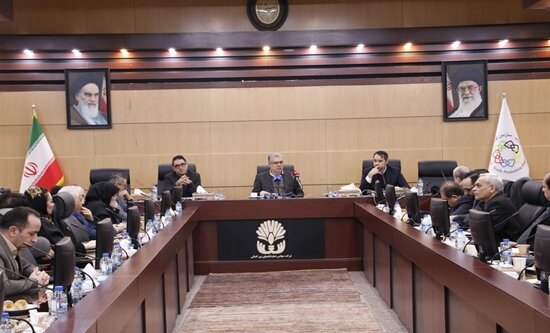
TEHRAN- The Head of the Iran Trade Promotion Organization (TPO), while outlining the fundamental objectives of the fourth Eurasia International Trade Exhibition, announced the initiative of holding the Iran-Eurasia Economic Cooperation Summit on the sidelines of this event with the presence of a group of officials from the Eurasian Economic Union (EAEU) and neighboring countries.
According to the TPO’s public relations department report, Mohammad Ali Dehghan Dehnavi, in a meeting for the fourth Eurasia International Trade Exhibition attended by a group of Iranian traders, businessmen, and some officials from the Iran Chamber of Commerce, pointed to the increase in Iran's trade exchanges with Eurasia, stating: "It seems that the current trade volume is not proportionate to the existing trade capacities; although, based on eight-month statistics, Iran's trade with Eurasian countries shows a 16 percent growth."
According to the head of the Iran TPO, the private sector and Iranian traders have gained a good understanding of the Iran-Eurasia Free Trade Agreement and have utilized the opportunity to trade with Eurasian member countries, although there is still untapped capacity for trade with these nations.
Dehghan Dehnavi, who is also the deputy minister of industry, mining and trade, noting that Iran's current trade value with Eurasian Economic Union member countries is less than five billion dollars, emphasized: "Our estimates indicate the trade capacity with these countries is at least 100 billion dollars, and if we can secure only five percent of this union's trade, achieving a figure of 40 billion dollars in exports is not far-fetched."
Further elaborating on holding the Iran-Eurasia International Trade Exhibition, the head of the Iran TPO said: "Exhibitions are the most organized tools for developing trade relations, and this exhibition started three years ago with the aim of developing trade with Eurasian Economic Union member countries. During this period, it has seen significant growth in terms of quality, and the presence of foreign guests. Last year, the president visited this exhibition, and this year, in its fourth edition, we have tried to plan beyond previous years. Fortunately, there has been good reception, and foreign guests are present at the exhibition."
The official then announced the initiative of holding the Iran-Eurasia Economic Cooperation Summit on the sidelines of this international event, adding: "In this edition, by leveraging the experience and legacy of previous rounds, and in order to build upon them, we will have creative initiatives in holding this event. Therefore, government officials from the Eurasian Economic Union and neighboring countries have been invited to participate in this event because it is believed this summit can provide a platform for dialogue on bilateral and multilateral economic cooperation, and neighboring countries can also use Iran as a bridge for trade with Eurasia."
16% growth in exports to Eurasia
In another part of his remarks, the deputy minister of industry, mining, and trade referred to Iran's free trade agreement with Eurasia and added: "With the implementation of this agreement, 87 percent of goods exchanged between Iran and the five member countries of the Eurasian Union became subject to zero tariffs, creating an unprecedented capacity for an export leap. This agreement has created significant capacity for trade development between Iran and Eurasian countries. Consequently, Iran's exports to the Eurasian region experienced a 16% growth over the first eight months of this year."
Referring to research conducted at the Trade Promotion Organization of Iran, Dehghan Dehnavi stated: "If the goods Iran currently exports to various countries are matched with the goods Eurasian Union member countries import from other parts of the world, it will become clear that for Russia alone, there is approximately $12 billion in potential trade capacity—a figure nearly ten times Iran's current exports to that country. This means that merely by activating existing capacities, exports can be multiplied. Furthermore, goods that are currently only produced for domestic consumption can be identified and potentially developed into export products, finding new markets in Eurasian countries."
Export successes in medical equipment sector
Continuing, the deputy minister of industry emphasized the necessity of removing non-tariff barriers between Iran and Eurasian Union member countries, stating: "One such issue lies in the areas of standards and removing transportation obstacles. Currently, connectivity has been established on the eastern side of the Caspian Sea, and on the western side, the Rasht-Astara railway project is being pursued. New railway routes via Nakhchivan and Armenia are also under consideration. In the field of standards, a major non-tariff barrier is the lack of a common standard language between Iran and Eurasian countries, as differences in standard systems have caused problems for Iranian producers. Removing this obstacle can pave the way for export development."
The head of the Trade Promotion Organization of Iran stressed the importance of promotional activities and increasing mutual understanding between traders of both sides, adding: "Creating spaces for dialogue, negotiation, and contract signing among economic actors is very important, and trade exhibitions are considered the most organized tool for achieving this goal."
"Currently, the private sector, especially in the medical equipment field, has been successful in this path and has managed to achieve significant exports to Eurasian countries by registering their products."
Referring to the role of customs in implementing the free trade agreement, Dehghan Dehnavi stated: "In the customs domain, Iran Customs has played an effective role in the joint committee negotiations. One important action is moving towards the electronic exchange of information, which can remove part of the non-tariff barriers. Additionally, good measures have been taken in rail transportation; the Islamic Republic of Iran Railways has reached important agreements with Eurasian countries and active railway routes have been established. However, in road transportation, we still face problems such as prolonged waiting times for trucks, which harms exports. This sector requires more serious measures."
In early December, Amir Roshan, deputy head of the TPO, told a coordination meeting that this year’s Eurasia International Trade Exhibition, which will be held from February 1 to 4, has been structured to highlight regional economic cooperation and ensure high-level attendance. He said hosting costs for official delegations and chambers of commerce representatives from EAEU member states will be covered under existing protocols and approved budgets to encourage broad participation.
The first will focus on monetary and financial issues, an area he described as a priority for EAEU members.
The second will review the International North–South Transit Corridor (INSTC), which is expected to ease access for regional, European and Arab markets through Iran.
A third section will address export-related issues, including logistics challenges, with the aim of improving trade flows through common standards.
The fourth will highlight goods and services with comparative advantages, particularly in energy, healthcare and other high-value sectors.
Roshan said invitations have been sent to ministers and senior economic officials from regional countries, and about one hundred sixty companies have been invited to participate as exhibitors or visitors.
“Any company or delegation interested in joining the event will be supported by the TPO,” he said.
Referring to the impacts of the Iran–EAEU free trade agreement, Roshan said trade grew in the first half of the current year despite earlier concerns over potential declines.
“We not only avoided a drop in exports, but recorded significant growth in exchanges with Eurasian countries,” he said, adding that the agreement helped keep Iran’s trade balance from turning negative amid regional instability and wartime disruptions.
Roshan said the Foreign Ministry and the TPO are fully prepared to organize business-to-business meetings and facilitate procedures related to the event. He expressed hope that coordinated work across government agencies would help the exhibition advance Iran’s trade objectives with Eurasia.
The official statistics indicate that Iran's trade with the Eurasian Economic Union has followed an upward trend in recent years. According to the IRICA report, the value of trade between Iran and member countries of this union has risen from $2.5 billion in the past to nearly $5 billion currently. This growth is a clear sign of the positive impact of implementing Iran's preferential trade agreement with the Eurasian Economic Union, and forecasts suggest that under current conditions, this trade value could be assessed at up to $20 billion.
Experts believe that this agreement will not only strengthen Iran's export capacities but will also lead to the development of stable, long-term economic relations between Iran and the member states of the Eurasian Economic Union.
In mid-August, Dehghan Dehnavi said that steel and petrochemicals are expected to account for 50 percent of the objectives set under Iran’s free trade agreement (FTA) with the Eurasian Economic Union.
He said the FTA, which entered into force on May 15, 2025, is unprecedented for Iran, reducing tariffs on 87 percent of traded goods.
He noted that while previous preferential trade agreements with the EAEU had expanded trade volumes, this latest agreement presents a unique opportunity for deeper integration.
“Trade agreements create both opportunities and challenges. The overall outcome is positive for both sides if vulnerabilities are addressed and opportunities maximized,” Dehnavi said. He emphasized that steel and petrochemical industries are major drivers of production and exports, and leveraging them effectively could achieve half of Iran’s FTA objectives.
The official called on the private sector to actively engage in Eurasian markets, pointing to research identifying which Iranian products have the highest export potential. “Private companies should focus on maximizing profitability, while policymakers ensure collective benefits such as employment, economic growth, and foreign currency inflows,” he said.
Dehnavi also noted that export opportunities vary across member states, highlighting Russia as one of the most lucrative markets for Iranian products and promising further studies to optimize engagement in the region.
According to Elham Haji Karimi, head of the Iran-EAEU FTA secretariat, the agreement, signed in December 2023 after more than two years of negotiations, covers 11 chapters, including trade in goods, technical measures, sanitary standards, rules of origin, customs cooperation, dispute resolution, government procurement, and sectoral cooperation in transport, energy, automotive industries, and free trade zones.
MA
Leave a Comment